A new study of ancient jewelry discovered in Jerusalem is providing researchers with clues about family life, wealth, and cultural practices in the city more than 2,000 years ago.
JERUSALEM — Researchers examined four gold ornaments and three bronze earrings recovered from Building 110 at the Givati Parking Lot excavations in Jerusalem's City of David.
The objects date primarily to the late third and early second centuries BCE, during the Hellenistic period.
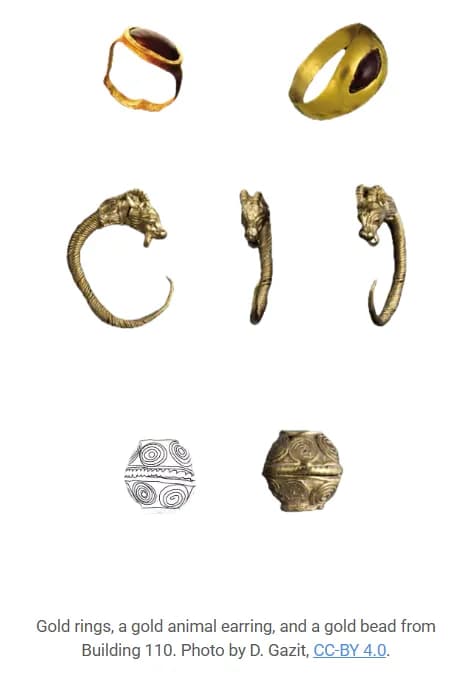
Among the finds are small gold rings set with deep-red gemstones, probably garnets, as well as a gold earring decorated with an animal-head motif, a hollow gold bead, and bronze earrings.
Building 110 was a large courtyard complex whose construction and plaster floors suggest that it may have been an elite residence.
Researchers noted that several of the ornaments were remarkably well preserved and were discovered in different locations within or beneath the building's floors.
Because gold was valuable and the objects showed little evidence of ordinary wear or damage, the researchers proposed that some may have been intentionally placed there rather than simply lost.
Two of the gold rings are exceptionally small. Researchers compared them with jewelry found in children's burials elsewhere in the Hellenistic world and suggested that the rings may have belonged to young girls.
The study also raises the possibility that the jewelry was deposited as part of rites connected with girls transitioning toward adulthood or marriage.
Similar practices involving jewelry are documented elsewhere in the Greek and Hellenistic world.
However, researchers describe this as an interpretation of the archaeological evidence, not a proven explanation for why the objects were placed inside the Jerusalem building.
The discoveries also add to archaeological evidence that Hellenistic Jerusalem included wealthy residents who participated in cultural and economic connections extending across the eastern Mediterranean.
For students of biblical history, the finds offer another glimpse into everyday life in Jerusalem during the centuries between the Old Testament period and the New Testament era.
Reference:
biblicalarchaeology/daily/ancient-cultures/rings-before-marriage-in-hellenistic-jerusalem